

California Enacts Landmark Scalp Cooling Coverage Legislation
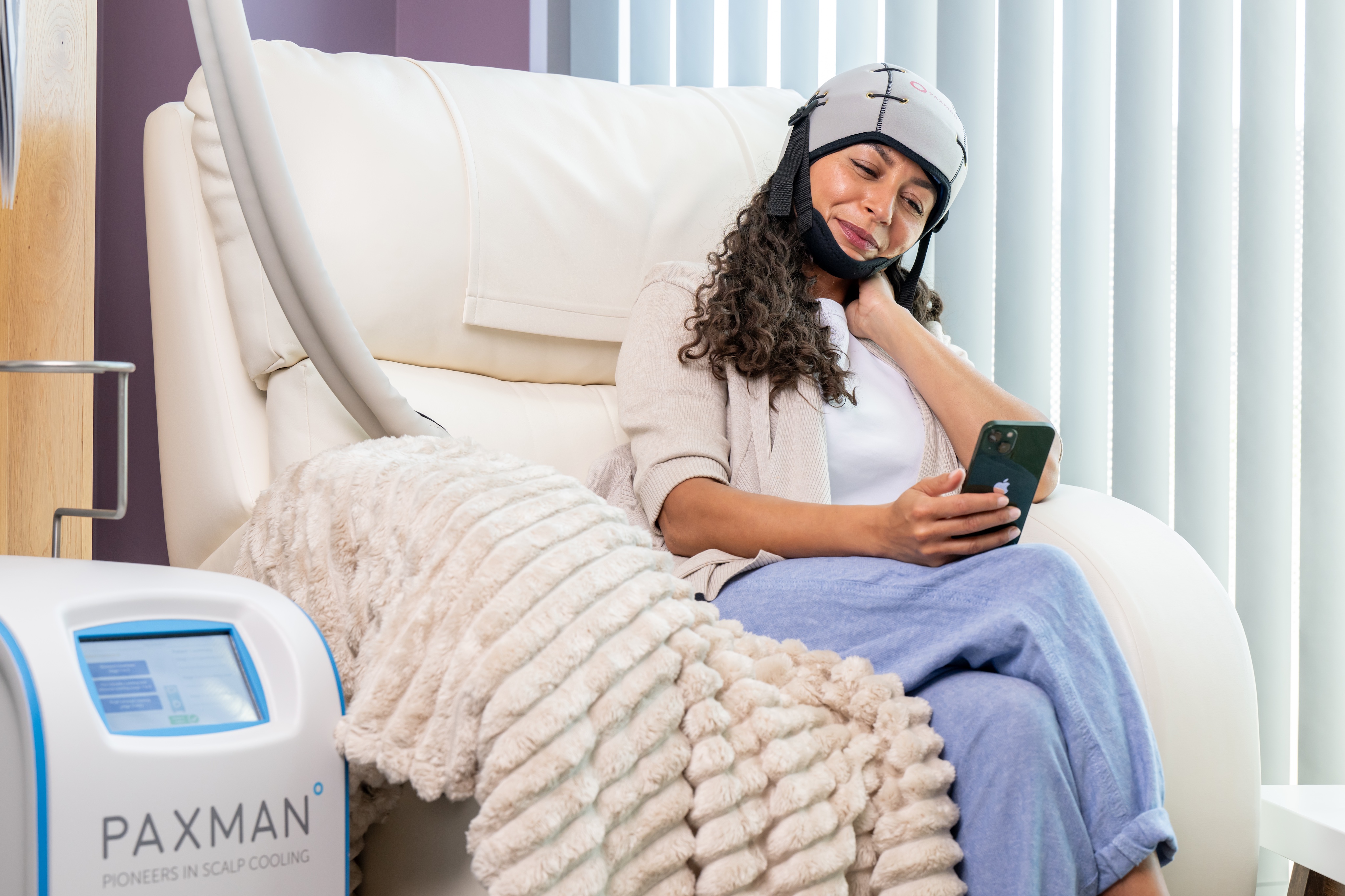
Patient using FDA-cleared Paxman Scalp Cooling System

Paxman
Paxman announces that the state of California has enacted Assembly Bill 1682, establishing insurance coverage requirements for FDA-cleared scalp cooling.
Meaningful patient access means more than making treatment available; it means ensuring that people can benefit from it regardless of their financial circumstances.”
HOUSTON, TX, UNITED STATES, September 28, 2026 /EINPresswire.com/ -- Paxman announces that the state of California has enacted Assembly Bill 1682, establishing insurance coverage requirements for FDA-cleared scalp cooling for cancer patients undergoing chemotherapy. The bill was signed by Governor Gavin Newsom on 27 September. — Richard Paxman, CEO
California joins New York, Louisiana, Maryland, West Virginia and Connecticut in enacting scalp cooling coverage legislation, as momentum continues to build in additional states. As the largest state to enact a scalp cooling coverage law to date, California provides an important model for policymakers considering how to expand patient access while establishing a clear, evidence-based standard for covered treatment.
AB 1682 defines covered scalp cooling as FDA-cleared devices and systems and expands access through large-group commercial insurance and Medi-Cal, California's Medicaid program. The legislation also includes protections designed to help limit patient out-of-pocket costs.
California's legislation followed extensive clinical, economic and regulatory review, including consideration of how coverage requirements interact with Affordable Care Act Essential Health Benefits requirements. The resulting legislation provides other states with a practical example of how scalp cooling coverage can be structured within existing insurance and reimbursement frameworks.
For patients, insurance coverage addresses one of the most significant remaining barriers to scalp cooling. Historically, scalp cooling in the United States has largely operated under a patient self-pay model, requiring patients and families to absorb the cost of treatment or seek reimbursement themselves. For some patients, that financial burden has placed scalp cooling out of reach.
The reimbursement environment is now changing. Three Category I CPT® codes for mechanical scalp cooling took effect January 1, 2026, creating a standardized pathway for providers to bill insurers for the clinical services involved in delivering scalp cooling. In states where coverage requirements are already in effect, including New York and Louisiana, Paxman is seeing increasingly consistent reimbursement as providers bill for scalp cooling using the new codes. This early experience demonstrates how state coverage requirements, standardized coding and provider billing can work together to improve patient access.
For cancer centers, Paxman's Insurance-Based Billing Model provides a practical way to implement that coverage. Participating providers can bill insurers directly for scalp cooling services using the Category I CPT® codes rather than requiring patients to pay for treatment themselves and seek reimbursement afterward. This allows scalp cooling to be administered and billed as part of chemotherapy treatment, reducing upfront financial barriers for patients while providing cancer centers with a standardized reimbursement pathway for the clinical resources required to deliver treatment.
The Insurance-Based Billing Model is already in place at cancer centers across the United States, and Paxman continues to work with providers to support implementation as insurance coverage expands. The model also provides access to Paxman's Patient Assistance Program for eligible uninsured and underinsured patients.
California already has a substantial scalp cooling infrastructure, with more than 45 cancer centers across the state offering Paxman and DigniCap Scalp Cooling Systems. AB 1682 therefore builds on an established provider network, helping more patients access treatment through insurance coverage rather than relying primarily on self-pay.
"Meaningful patient access means more than making treatment available; it means ensuring that people can benefit from it regardless of their financial circumstances," said Richard Paxman, Chief Executive Officer of Paxman. "Over the past several years, we have worked across the full access pathway, from building clinical evidence and securing FDA clearance to advancing coding, reimbursement and provider implementation. We are now seeing those pieces come together in a way that can fundamentally change how patients access scalp cooling in the United States."
Passage of AB 1682 follows an extensive independent analysis conducted by the California Health Benefits Review Program (CHBRP), which found strong evidence that FDA-cleared automated scalp cooling systems effectively reduce chemotherapy-induced hair loss and do not increase the risk of scalp metastasis.
California's approach is particularly significant for other states considering scalp cooling legislation. The final law establishes a defined standard based on FDA-cleared technology, aligns coverage with the existing reimbursement pathway for provider-delivered scalp cooling, and expands access through both large-group commercial insurance and Medicaid. The legislative process also addressed the regulatory considerations involved in developing coverage within existing federal and state insurance requirements.
"California provides policymakers in other states with a practical framework they can look to as they develop their own legislation," Paxman said. "We now have FDA-cleared technology, strong clinical evidence, CPT® Category I codes, an established provider billing pathway and real-world experience with coverage mandates already in effect. The focus is increasingly shifting from whether scalp cooling should be covered to how we make that coverage work effectively for patients and providers."
Paxman is actively working with legislators, clinicians, patient advocates and other stakeholders in key states to advance similar measures. As additional states consider coverage legislation, the experience in states where mandates are already effective can help inform implementation and demonstrate how insurance coverage and provider billing can work together to expand patient access.
Scalp cooling helps reduce chemotherapy-induced hair loss, one of the most visible and distressing side effects of cancer treatment. The National Comprehensive Cancer Network® (NCCN®) recommends scalp cooling as a Category 2A treatment option for patients receiving chemotherapy. Paxman and DigniCap Scalp Cooling Systems are available in more than 900 cancer centers across the United States
Paxman remains committed to working with policymakers, cancer centers, clinicians, patient advocates and payers to expand insurance coverage, support effective reimbursement and make scalp cooling accessible to more patients throughout the United States.
Kathryn Daniel
Paxman US Inc
email us here
Visit us on social media:
LinkedIn
Instagram
Facebook
YouTube
TikTok
X
Legal Disclaimer:
EIN Presswire provides this news content "as is" without warranty of any kind. We do not accept any responsibility or liability for the accuracy, content, images, videos, licenses, completeness, legality, or reliability of the information contained in this article. If you have any complaints or copyright issues related to this article, kindly contact the author above.
